Training AI-native engineers, part 1 of 2
Coding agents build features in minutes, so most developers start by telling them what to build. When requirements are unclear, however, the agent fills the gaps itself, and those silent decisions show up later as rework and tons of extra prompts. The engineers who get the most out of agents leave them the least room to guess.
On a recent four-day build, the agent asked the questions first: 40 to 60 of them in two hours, turned into a spec, recorded decisions and around 20 tickets. From then on, roughly 75% of the time was one repeatable loop: implement, test, move on.
In this two-part series on AI-native engineering, we look at where that engineering work now happens: before implementation (this article) and around implementation (part 2).
We start with those two hours of questions.
Stop the agent from building too early
In the client projects and trainings we run, most developers open a session the same way: they tell the agent what to build. We increasingly do the opposite and let the agent interrogate the team about the feature first.
In this step, the agent doesn’t design or code anything. Its job is to expose everything that is still undefined, so the team can make those calls itself.
Every unanswered question becomes a decision in the code
When requirements or architecture are unclear, in most cases a human developer stops and asks a colleague, the product owner or an architect before going further. A coding agent is much more likely to resolve the ambiguity itself and carry on.
So when a decision isn’t discussed up front, someone makes it during implementation, often without realising it. Think of questions such as:
- Should this state be stored or calculated?
- What happens when an API is unavailable?
- Which permissions apply?
- Should an existing component be reused?
- What happens when two records conflict?
Each of these has a right answer for your product. Left open, the agent picks one, and you find out which one during review, or later.
Make the first interaction an interrogation
That’s why the first interaction becomes an interrogation instead of a prompt. We often start with a grill-with-docs session, a skill from Matt Pocock’s skills framework.
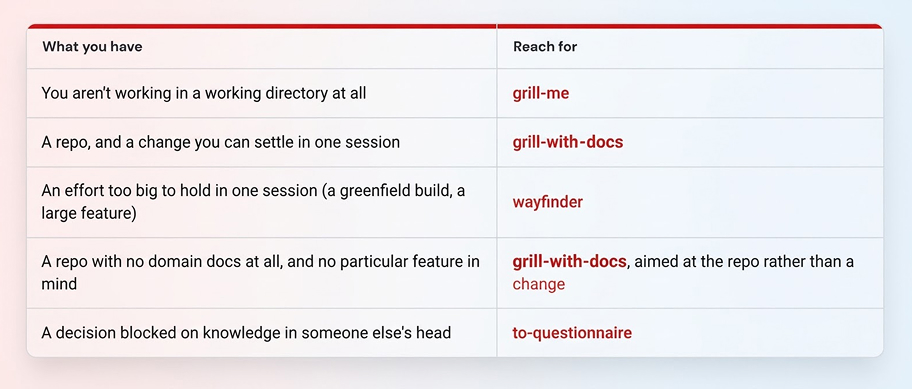
You give the agent:
- product context
- the current architecture
- relevant code
- technical constraints
- the intended outcome
Because the grilling prompt is built into the skill, the agent then works through the uncertainties by itself. For each question, it lays out a few options, recommends one and explains why, so the decision stays with you.
Whether it gives you ten questions or even sixty, the value lies in the correction loop it starts:
- the agent raises a decision the team hadn’t considered
- the team corrects an assumption the agent got wrong
- that answer reveals another dependency or question
- the undefined space gets smaller and smaller
This is a short feedback loop, placed as early as possible inside your workflow. The earlier you find a gap, the less time and fewer tokens the agent has spent on it. Skip the grilling, and the open question never gets asked: it goes straight into the implementation, you only notice it afterwards, and you start over. With a proper grilling session, you catch the biggest fish before a single line of code exists.
Turn the conversation into engineering artefacts
Once the grilling is done, the output needs to outlive the chat session: in the short term to keep the work token-efficient, and in the long term to log every decision, so none of them gets erased by accident. This is where spec-driven development starts. Convert it into:
- specifications
- user stories
- functional requirements
- implementation tickets
- acceptance criteria
- Architecture Decision Records (ADRs)
In the Pocock flow, this is defined as grill, to-spec, to-issues, implement. The to-spec step summarises the grilling conversation into written documentation, and to-issues splits that spec into tickets. Both steps are mainly for larger features, and the tickets they produce are working documents: once one is resolved, its issue file has done its job.
For smaller ones, grill and implement usually does the trick.
Recording decisions, on the other hand, is almost a must. Agents can easily see what was decided instead of having to reason about it by looking into the code. It’s not the most obvious thing to do, though: people have different workflows, so it requires everyone to support it. On an application that several people work on, it also gives you one clear advantage: decisions become part of the scope, so they can’t be overruled casually.
Decision records give the agent a memory of intent
Imagine that a month later, someone on the team asks the agent to “make the button red”. Without a decision record, the agent just does it.
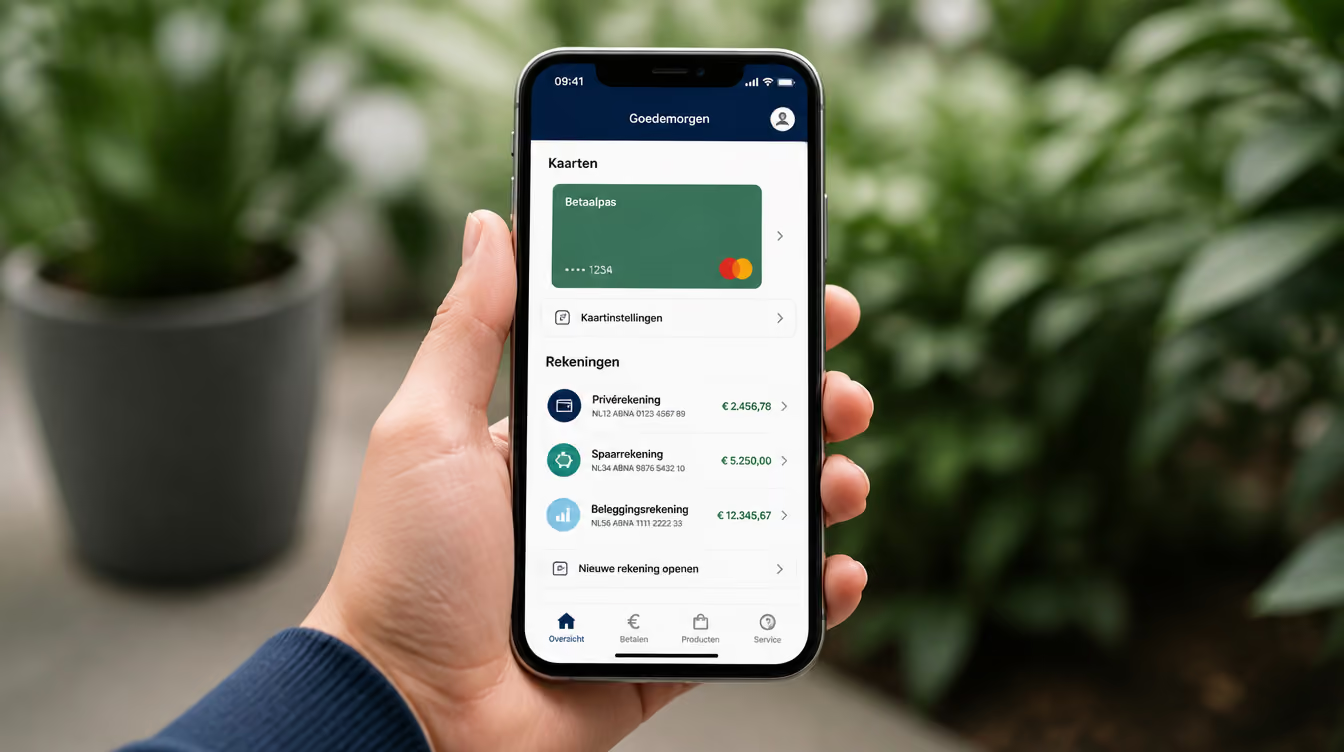
With the earlier decision on record, the same request plays out differently. The agent sees that green was a well-considered choice, knows why, and flags the conflict before it changes anything.
Once the work is defined, implementation gets way cheaper
Half a day, or a full-day of answering questions can feel slow, but all of this past prep work gets rewarded in the ticket:
- one bounded objective
- a clear scope
- explicit acceptance criteria
- the relevant ADRs
- links to the specification
- no major unresolved questions
- a defined verification method
With tickets like that, the implementation prompt can be very short: implement this one ticket, follow the referenced decisions, satisfy the acceptance criteria, build test-first and verify the result.
We add a few guardrails on top: stick to the acceptance criteria of the ticket, don’t start a ticket while a blocking one is still open, use development tools to give the agent eyes and ears (such as Playwright to visually see that a feature is working, or giving it access to your browser), and close each ticket with a strict code review.
A strong model plans, a light model builds
Well-defined tickets also make the build cheaper in another way: they change which model you need. A strong model handles hard problems well, but it’s expensive to code with. A light model is cheap and sticks to the task in front of it, though it pays little attention to how a change affects the rest of the codebase.
So we use both, with the developer in between. The strong model does the grilling and planning, the developer makes the decisions and checks every result, and the light model builds the tickets from the plan. Tickets that touch a complex part of the feature still go to Sonnet or Opus, to be safe. That way, you pay for strong reasoning where the hard thinking happens and for cheap tokens everywhere else.
The fair objection: this looks slow
Half a day or a full day of questions before any code sounds like the opposite of what agents promise. Yet that time gets spent either way. Skip the definition, and it comes back later, spread over several days of rework, correction prompts and hidden architectural mistakes.
A first check for your own team
Take the last feature an agent built for you and list the decisions it made that nobody explicitly asked for: stored or calculated state, what happens when an API fails, permissions, component reuse. Every item on that list is a question a grilling session would have put to the team first.
The fastest way to build with an agent is often to stop it from building too early.
Next: keeping the agent inside the lines
A well-defined ticket settles what to build. It doesn’t yet control how the agent builds it: naming conventions, component reuse, complexity limits, tests. Most teams answer that by writing more instructions into CLAUDE.md.
In part 2, we explain why relying on instructions is the most expensive way to keep an agent on track, and what to use instead.