Regulatory monitoring across 27 countries cannot scale manually. Faktion partnered with SD Worx to build a production-grade Legal Watch platform: agentic AI that scans hundreds of sources, detects regulatory changes, and assesses business impact per domain, so legal experts focus on judgment, not legwork. Five countries live, more on the way.
Regulatory monitoring across dozens of countries, hundreds of sources, and multiple business domains is not a task that scales manually. Faktion and SDWorx partnered up to solve it, building a regulatory monitoring platform powered by agentic AI. The platform handles the scale: continuously scanning sources, detecting changes, and assessing business impact. The legal experts provide the judgment: reviewing flagged updates, making the calls, and feeding their decisions back into the system. The partnership reinforces SD Worx's decades of legal and regulatory expertise built across 27 countries, and Faktion's 10+ years of experience building AI solutions in HR and payroll.
Legal experts at SD Worx continuously monitor regulatory changes across payroll, HR, and workforce management in every country where the company operates. Tax brackets, pension contribution rates, collective labour agreements, court decisions, statistical indices: all of these change, across dozens of jurisdictions, often without warning. A missed update is not an inconvenience. It is a risk.
Until recently, that monitoring was done manually across all of SD Worx's global operations, spanning hundreds of sources. Legal experts would:
SD Worx is scaling internationally at an unseen pace. The volume of sources, jurisdictions, and business domains is growing faster than any manual process can sustain.
Regulatory monitoring is a critical process for SD Worx, and for a capability this central to the business, SD Worx needed full control over the key components: the data sources being monitored, the models doing theinterpretation, and how the system improves over time. Building the platform themselves was the only way to ensure it performs exactly the way SD Worx need sit to, reflecting their own business processes, and evolving in line with theirown roadmap.
SD Worx had already validated the power of LLM-based regulatory monitoring through an initial proof of concept. To take the prototype to production on those terms, SD Worx turned to Faktion. The two organisations had already worked together on an earlier project, and that experience had given SD Worx confidence in Faktion's ability to deliver production-ready platforms. Faktion picked up the existing prototype, took end-to-end ownership, scaled it to production.
Faktion and SD Worx a recurrently operationalising the platform across five pilot countries: Germany, the Netherlands, Sweden, Luxembourg, and Spain and the platform has already processed over 11,000 legal documents.

Legal Landscape Monitoring Platform
Faktion built a platform that augments the regulatory monitoring process: from source configuration and document collection, through change detection, to intelligent business impact assessment. The scope is broad by design: legislation, court decisions, pension fund publications, collective labour agreements, statistical indices, across any country and business domain monitored by SD Worx.
Legal experts configure what to monitor using plain-language instructions, no knowledge of HTML or web scraping required. The platform handles navigation, extraction, and scheduling.
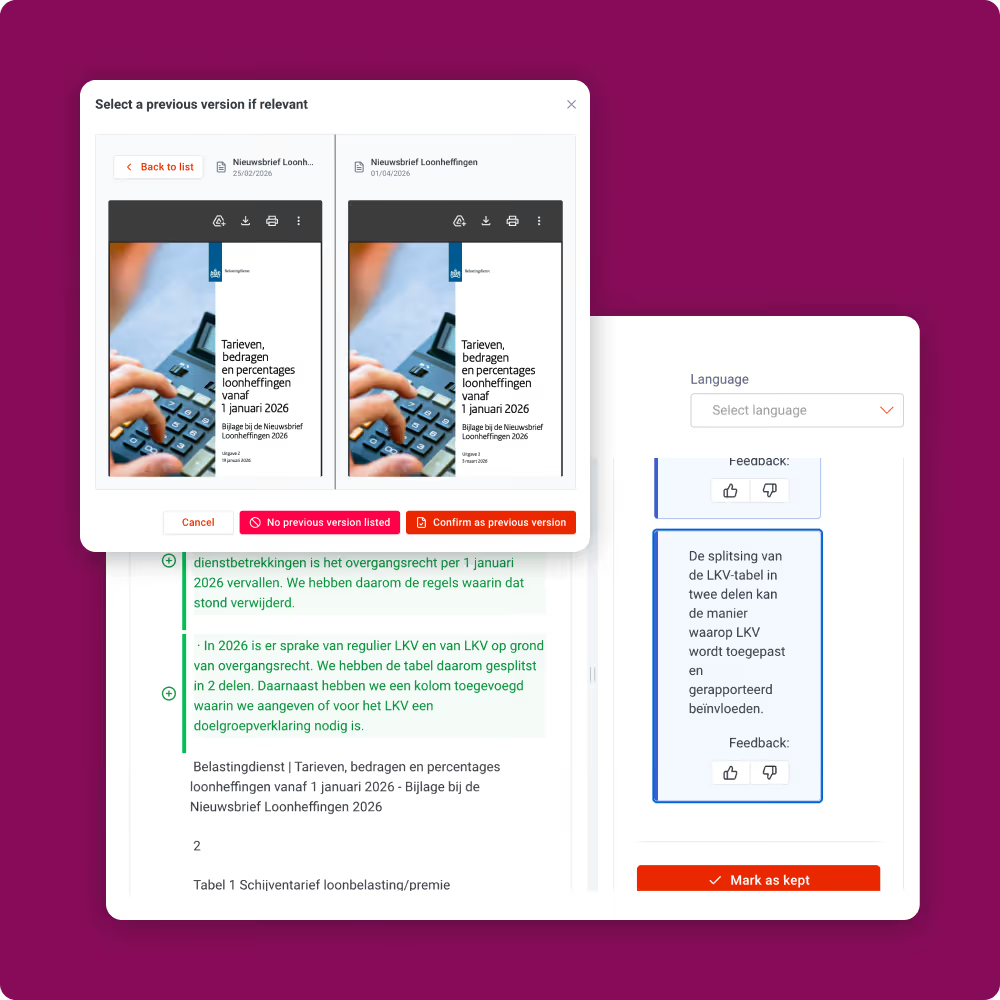
When a source publishes an updated document, the platform compares versions automatically and forwards only meaningful differences for analysis. Changes are highlighted visually: additions in green, deletions in red, partial matches in yellow.
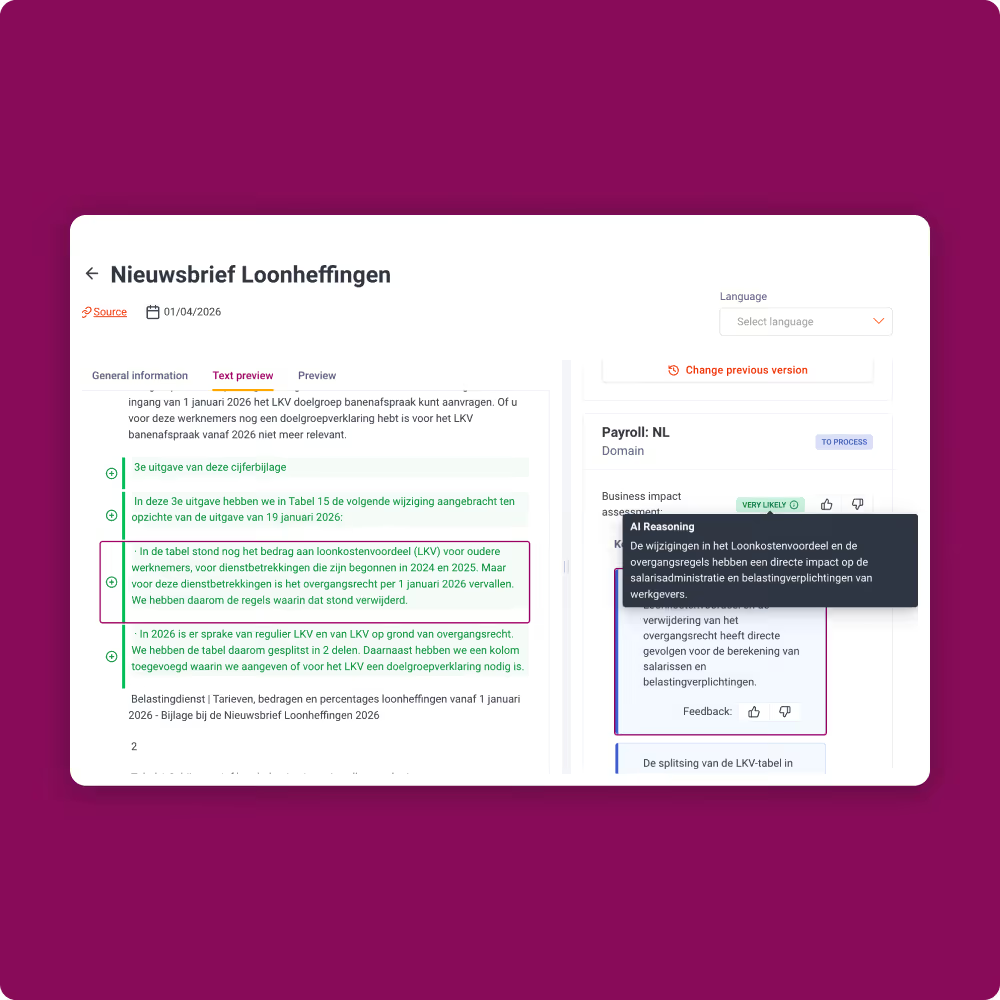
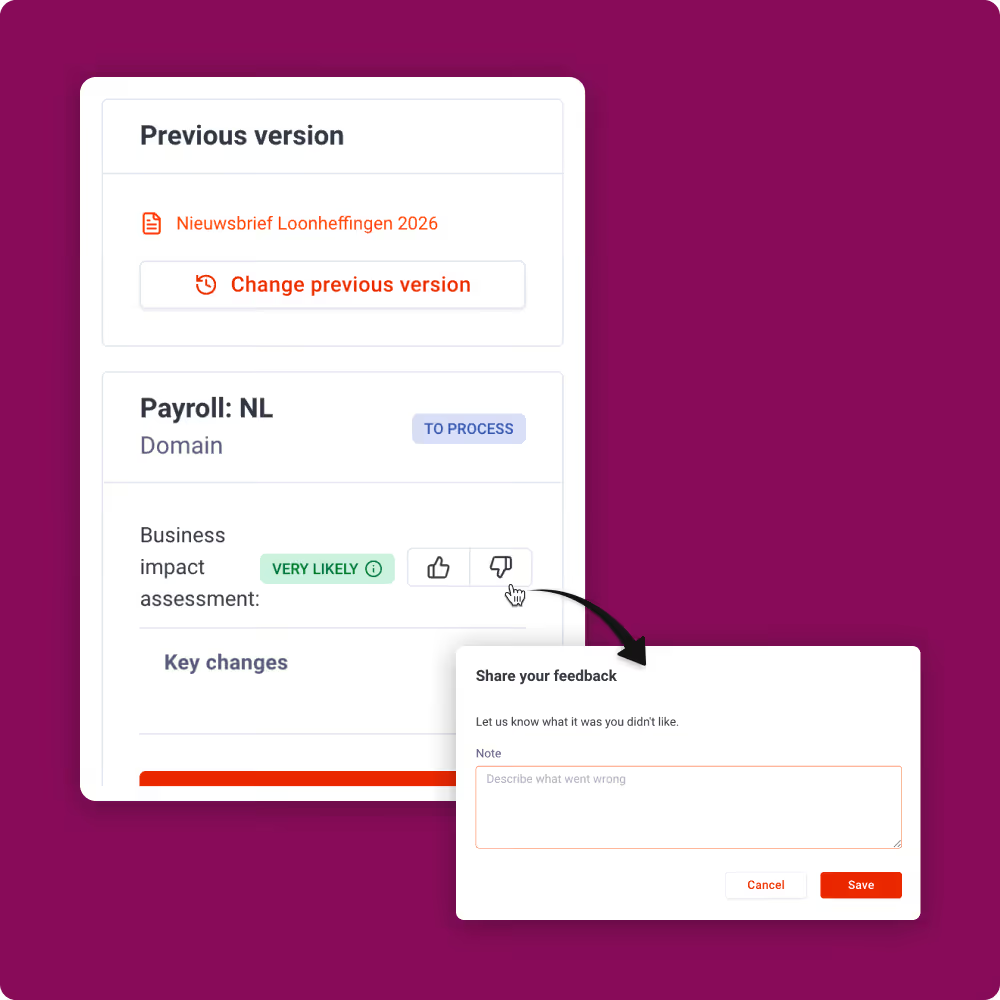
Every document is analysed and assigned a business impact score per domain. For flagged documents, the platform generates a summary, an impact assessment, and a list of key changes in a single structured response.
Legal experts review flagged documents, mark them as kept or discarded, and explain their decisions. That feedback loop gradually captures the team's expertise and continuously sharpens the output.
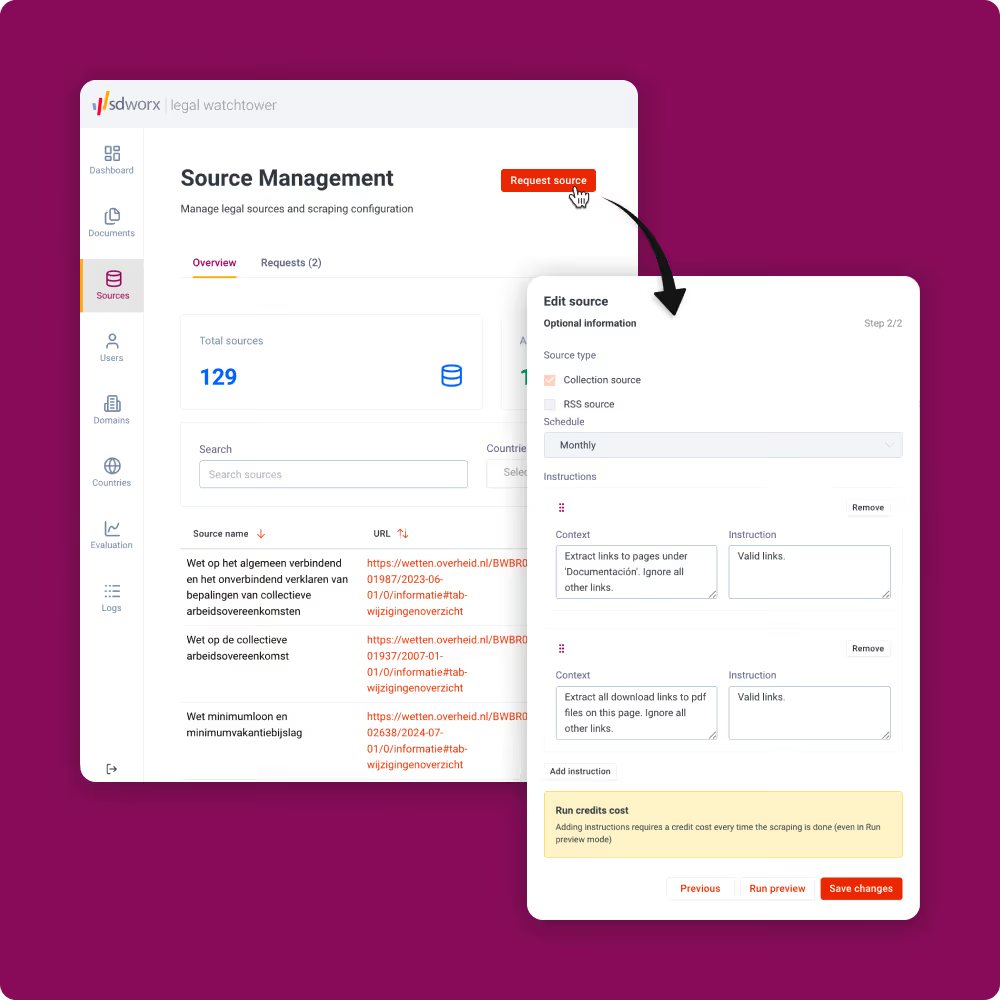
Legal experts configure what to monitor using plain-language instructions, no knowledge of HTML or web scraping required. The platform handles navigation, extraction, and scheduling.
When a source publishes an updated document, the platform compares versions automatically and forwards only meaningful differences for analysis. Changes are highlighted visually: additions in green, deletions in red, partial matches in yellow.
Every document is analysed and assigned a business impact score per domain. For flagged documents, the platform generates a summary, an impact assessment, and a list of key changes in a single structured response.
Legal experts review flagged documents, mark them as kept or discarded, and explain their decisions. That feedback loop gradually captures the team's expertise and continuously sharpens the output.
LLM-based AI systems can read and process long regulatory documents in seconds, with a consistency that is impossible to maintain manually across hundreds of sources. What they lack is the specific domain expertise that SD Worx's legal specialists have built over more than 80 years. The platform is designed around that complementarity: AI handles the scale, speed, and pattern recognition; the experts provide the judgment. Together, they achieve what neither could alone.
Built in Close Collaboration
The engagement was shaped around long-term collaboration. From the outset, the priority was to get the platform in front of real users as quickly as possible, not as a demo but as their actual working tool. Real usage, not test scenarios, would drive the decisions on where to improve, extend, and refine. That principle has guided every phase of the build.

The regulatory landscape is becoming more complex every year, especially for employers operating across borders. With SD Worx Legal Watch, we combine the power of AI with more than 80 years of legal expertise. The platform significantly reduces manual work for legal teams and lowers the risk of missing critical updates. For customers, this translates into greater confidence that payroll calculations, HR processes and workforce policies remain fully compliant with local and European regulations.

The SD Worx Legal Watchtower will soon go live in 5 countries - Germany, the Netherlands, Sweden, Luxembourg, andSpain - quickly followed by more countries. What makes the next phase of scaling possible is the way the platform was built: legal experts configure sources, define monitoring scope, and onboard new countries and domains entirely on their own, without involving Faktion's engineers or IT. The platform handles the rest. That self-sufficiency is what turns five countries into fifty, and one regulatory domain into many.
For SD Worx:
For SD Worx's clients:







%201.avif)